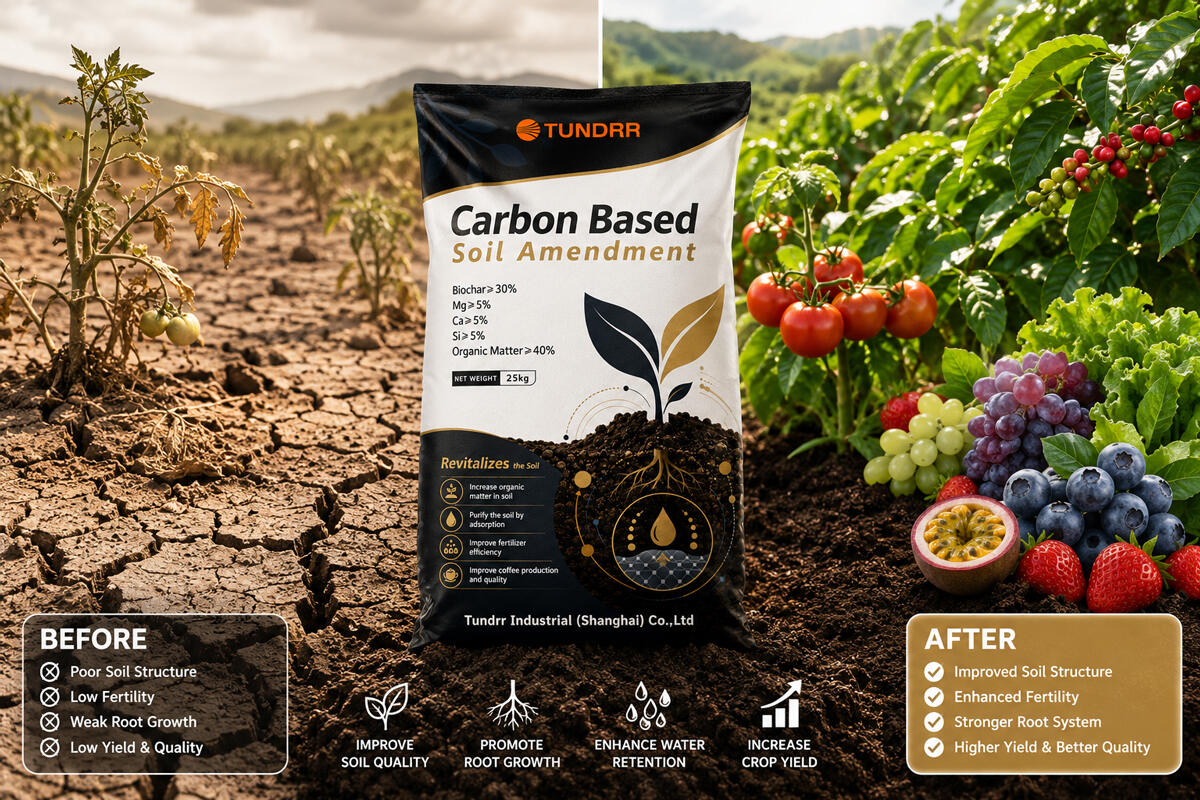
Enhance soil structure and physicochemical properties, enrich soil organic matter, and facilitate the formation of stable soil aggregates.

Supplement calcium and magnesium nutrients that are easily deficient in soils as well as plant beneficial silicon.

Rich in biochar, it increases soil cation exchange capacity, alters the speciation and bioavailability of heavy metals, and immobilizes heavy metals through adsorption.
Stimulate root development, improve nutrient absorption, promote flowering and fruiting, and boost yields.
Organic Matter
≥35.0%
Biochar
≥25.0%
Calcium Oxide (CaO)
≥6.25%
Silicon Dioxide(SiO₂)
≥4.5%
Magnesium Oxide (MgO)
≥4.25%
pH
7-9
Fecal coliforms
≤100 CFU/g
Ascaris egg mortality rate
:≥95%
Mercury (Hg)
:≤2 mg/kg
Arsenic (As)
≤15 mg/kg
Chromium (Cr)
≤150mg/kg
Thallium (Tl)
≤2.5mg/kg
Cadmium (Cd)
:≤3 mg/kg
Lead (Pb)
:≤50 mg/kg
Biuret
:≤1.5%
It can be used as a basal fertilizer, or applied as a topdressing through band application or hole application. Deep application with soil covering is recommended. Fertilization rates may be adjusted appropriately according to local farming practices in different regions.
Recommended application rates are as follows:
Oil Palm: 1–2 kg/tree
Durian: 1–2 kg/tree
Fruit Trees: 0.5–1 kg/tree
Vegetables: 80–100 kg/acre
Field Crops: 100–120 kg/acre
Horticulture: 5–10 kg mixed with 100 kg of substrate


 Contact us
 How to buy
 News
News EN
EN